

- Industry Size (2026)
- USD 2556.00 Bn
- Forecast (2036)
- USD 4797.96 Bn
- CAGR (2026 to 2036)
- 6.50%
Luxury Travel Market Size, Market Forecast and Outlook By FMI
The luxury travel market was valued at USD 2,400.00 billion in 2025 and is expected to reach USD 2,556.00 billion in 2026. The market is projected to reach USD 4,797.96 billion by 2036, registering a 6.50% CAGR during the forecast period. Air transportation is likely to lead mode of transportation type with 50.0% share, while online booking is projected to account for 46.3% share of booking channel revenue in 2026.
Summary of the Luxury Travel Market
- Demand and Growth Drivers
- Premium travel spending is expected to rise as affluent consumers prioritize experience quality over trip frequency.
- Expedition and adventure luxury travel are likely to gain traction as travelers seek access to remote and capacity-limited destinations.
- Wellness-led luxury travel is anticipated to expand as premium retreats combine health assessment, nutrition planning, and restorative programs.
- Product and Segment View
- Air transportation is expected to lead the mode of transportation type segment due to strong use of first-class and business-class travel.
- Online booking is likely to remain a major channel as affluent travelers use digital platforms for curated premium itineraries.
- Package travellers are anticipated to support market revenue as buyers seek coordinated experiences with privacy and expert planning.
- Geography and Competitive Outlook
- Australia is expected to lead country-level growth due to premium nature-based tourism and strong demand for exclusive outdoor experiences.
- India is likely to record strong expansion as rising affluence supports higher spending on international and domestic luxury travel.
- Companies with stronger journey curation and exclusive destination access are anticipated to gain better positioning.
- Analyst Opinion
- Ronak Shah, Principal consultant for Travel and Tourism at FMI, suggests, “The luxury travel market is moving toward fully curated journeys where service coordination matters as much as destination choice. Operators that secure exclusive access and personalize each travel layer are likely to gain advantage as affluent travelers place higher value on time savings and experience quality.”
- Luxury Travel Market Value Analysis
- The luxury travel market is shifting from premium accommodation-led spending toward curated experience-led travel.
- Demand is likely to rise as affluent travelers allocate more discretionary spending toward private, wellness, and adventure-focused journeys.
- Online booking is expected to increase as digital platforms improve access to bespoke travel planning and premium inventory.
- Spending is anticipated to remain backed by high-net-worth traveler growth, destination exclusivity, and stronger appetite for personalized itineraries.
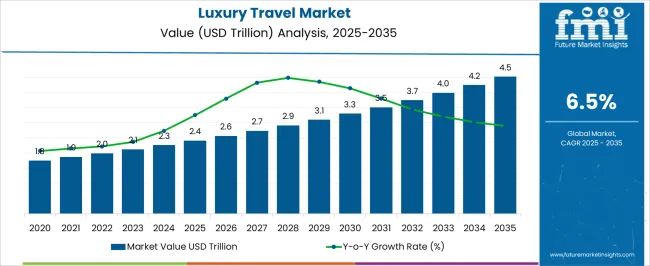
Key Takeaways, Market Size, and Forecast
- The luxury travel market was valued at USD 2,400.00 billion in 2025.
- The luxury travel market is expected to reach USD 2,556.00 billion in 2026.
- By 2036, the luxury travel market is projected to reach USD 4,797.96 billion.
- From 2026 to 2036, the market is anticipated to expand at a 6.50% CAGR.
- Air transportation is likely to account for 50.0% share of the mode of transportation type segment in 2026.
- Online booking is expected to hold 46.3% share of the booking channel segment in 2026.
- Australia is projected to record the fastest country-level expansion at 8.10% CAGR by 2036.
Luxury Travel Market key takeaways
| Metric | Details |
|---|---|
| Industry Size (2026) | USD 2556.00 billion |
| Industry Value (2036) | USD 4797.96 billion |
| CAGR (2026 to 2036) | 6.50% |
Source: Future Market Insights, 2026
Luxury Travel Market definition
The luxury travel market represents the premium tier of the global tourism industry where service exclusivity, destination access, accommodation quality, and experience personalization define the purchase proposition. This market spans air, land, and sea transportation modes, encompasses both packaged and independent travel formats, and serves leisure, wellness, adventure, and cultural travel motivations.
Luxury Travel Market inclusions
Market scope includes all commercially traded luxury travel services segmented by mode of transportation (air, cruise, rail, road), booking channel (online booking, travel agents, direct), and tour type (package traveler, independent traveler). Revenue sizing spans the 2026 to 2036 forecast period with regional and country-level assessments.
Luxury Travel Market exclusions
The scope excludes standard economy travel, budget accommodation, domestic day trips, business travel purchased at corporate contracted rates, and medical tourism. Travel insurance and visa processing services are outside the defined boundary.
Luxury Travel Market research methodology
- Primary research: FMI analysts conducted interviews with procurement directors, product managers, and distribution executives across key luxury travel organizations to map decision gates and sourcing specifications.
- Desk research: Data collection aggregated regulatory filings, trade association publications, industry statistics, and company annual reports to establish verifiable baseline parameters.
- Market sizing and forecasting: Baseline values derive from a bottom-up aggregation of luxury travel transaction volumes, applying region-specific adoption curves and pricing indices to project demand through 2036.
- Data validation and update cycle: Projections are tested against publicly reported sales statistics, industry data, and company financial disclosures on a quarterly refresh schedule.
Reasons to Guide the Luxury Travel Market Forward
- From private yacht cruises to immersive culinary tours, luxury travel providers elevate experiences to new heights, cater to the evolving tastes of discerning travelers, and seek authenticity and meaning in their journeys.
- As awareness of environmental and social issues grows, luxury travelers are widely seeking destinations and experiences that prioritize sustainability and responsible tourism practices.
- Luxury travel providers are embracing eco-friendly practices, from offering carbon-neutral trips to partnering with conservation organizations to meet the demand for sustainable luxury experiences.
Key Factors Hindering the Luxury Travel Market
- Geopolitical tensions, natural disasters, and global health crises can significantly impact the luxury travel market by disrupting travel patterns, deterring affluent travelers from visiting certain destinations, and imposing travel restrictions.
- Uncertainty surrounding safety and security dampens demand for luxury travel experiences, leading to reduced bookings and revenue losses for luxury travel providers.
- Economic downturns, currency fluctuations, and market volatility can pose challenges for the luxury travel market by affecting consumer spending habits, disposable incomes, and investment portfolios.
Category-wise Insights
The below section shows the leading segment. Based on booking channel, the online booking segment is accounted to hold a market share of 46.3% in 2026. Based on tour type, the package traveler segment is accounted to hold a market share of 48.5% in 2026.
| Category | Market Share in 2026 |
|---|---|
| Online Booking | 46.3% |
| Package Traveler | 48.5% |
Online Booking Segment to Hold a Significant Share in the Market
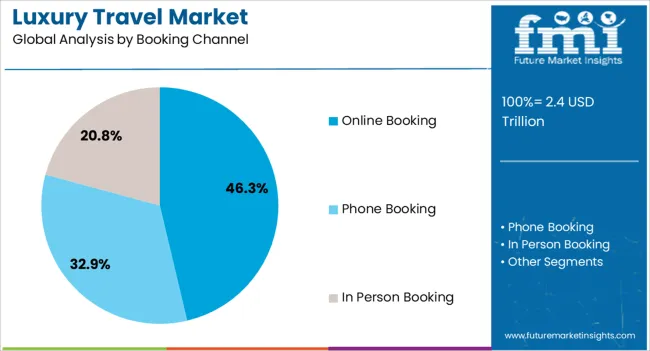
Based on booking channel, the online booking segment stands out, capturing a significant market share of 46.3%. The trend reflects the boom in preference among luxury travelers for the convenience and accessibility offered by online platforms when planning and booking their upscale experiences.
From personalized itineraries to seamless transactions, online booking channels cater to the advancing needs of affluent travelers, propelling their popularity in the luxury travel market.
Package Traveler Segment to Hold a Dominant Share in the Market
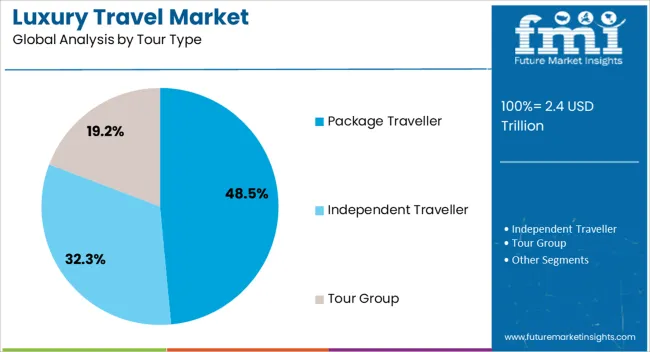
Based on tour type, the package traveler segment is accounted to hold a market share of 48.5% in 2026. Packaged tours provide a hassle-free and curated experience, offering a blend of exclusive amenities, cultural immersion, and expert guidance.
As luxury travelers continue to seek curated experiences without compromising on comfort and exclusivity, the package traveler segment maintains its stronghold in the dynamic landscape of luxury travel.
Country-wise Insights
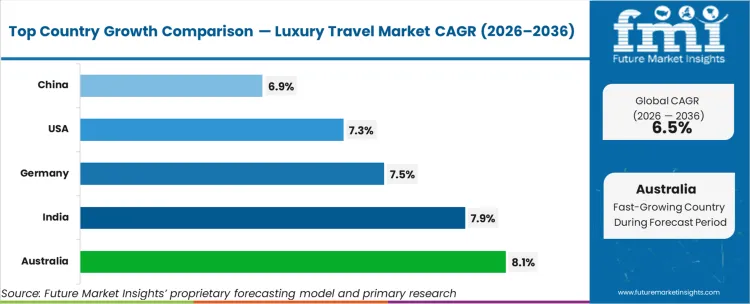
The table describes the top five countries ranked by revenue, with Australia holding the top position. Australia dominates the luxury travel market with its natural beauty, diverse landscapes, and unique experiences.
Affluent travelers indulge in luxury vacations for iconic destinations like the Great Barrier Reef and luxury eco-lodges, essaying the temptation as a premier luxury travel destination.
.webp "Top Country Growth Comparison Luxury Travel Market Cagr (2026 2036)")
| Countries | CAGR |
|---|---|
| United States | 7.3% |
| Germany | 7.5% |
| China | 6.9% |
| India | 7.9% |
| Australia | 8.1% |
Extensive Usage of Luxury Travels Boosts the United States Market
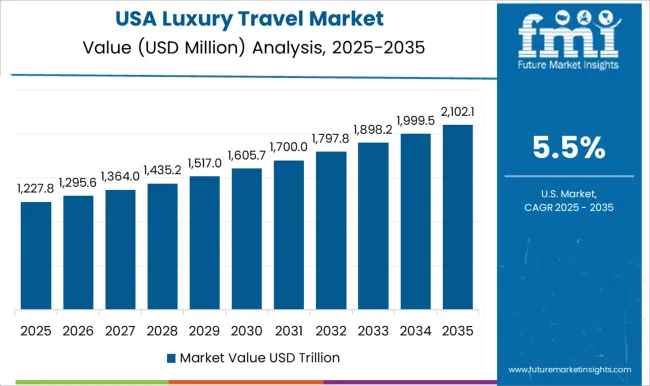
In the United States, the luxury travel market is predominantly utilized for a variety of purposes, including leisure travel, business travel, and special occasions such as weddings and milestone celebrations.
The United States boasts a vibrant luxury travel market catering to discerning travelers seeking unique experiences, from luxury wilderness retreats in national parks to opulent urban escapes in cosmopolitan cities like New York and Los Angeles.
Extensive Usage of Luxury Travel Services Booms the Market in Germany
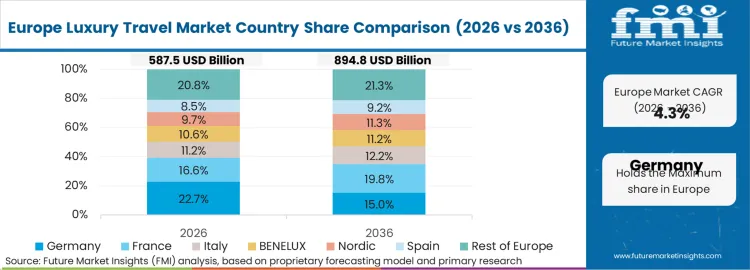
In Germany, the luxury travel market is utilized by affluent travelers seeking refined and sophisticated travel experiences both domestically and internationally. German travelers often indulge in luxury vacations to iconic destinations such as the French Riviera, the Italian countryside, or exotic tropical islands.
The affluent business community often utilizes luxury travel services for corporate events, incentive trips, and executive retreats, reflecting the demand for exclusive and tailored travel experiences.
Luxury Travelers Rising in Popularity is Ensuring Market Growth in China
In China, the luxury travel market is primarily utilized by affluent travelers seeking prestigious and extravagant travel experiences both domestically and abroad. Luxury travelers often seek high-end accommodations, private tours, and VIP services that showcase luxury and exclusivity.
Luxury travel services are frequently utilized by the business elites of China for corporate meetings, luxury events, and incentive travel programs, reflecting the country's growing affluence and sophistication in luxury travel preferences.
Burgeoning Middle Class Raise the Demand for Luxury Travels in India
Rising affluence, a burgeoning middle class, and a desire for unique experiences fuel the luxury travel market in India.
Affluent Indian travelers are seeking personalized and immersive experiences both domestically and internationally, driving demand for luxury accommodations, boutique hotels, and experiential stays.
Presence of Pristine Destinations Impresses the Luxury Travel Market in Australia
In Australia, the luxury travel market is utilized by affluent travelers seeking unique and exclusive travel experiences that showcase the natural beauty and cultural heritage of the country.
Luxury travel experiences in Australia often emphasize outdoor adventures, wildlife encounters, and luxury eco-lodges that offer sustainable and immersive experiences in nature.
Luxury travel services are utilized by business elites of Australia for corporate retreats, luxury events, and incentive travel programs, reflecting the affluent and adventurous travel preferences of the country.
Competitive Landscape

In the competitive landscape of the luxury travel market, a blend of established players and boutique providers vie for affluent travelers' attention. Boutique operators specializing in niche segments like adventure travel or wellness retreats carve out their niche.
Differentiation through unique experiences, personalized service, and exclusive access to hidden gems defines success in this dynamic and discerning market. Some of the key developments are:
- In June 2025, Lindblad Expeditions partnered with FOOD & WINE magazine to disclose an enticing eight-day voyage through the Pacific Northwest, tracing the Columbia and Snake Rivers.
- In February 2025, Australia-based Flight Centre Travel Group acquired Scott Dunn Ltd. for approximately USD 149 million. This strategic move marked Flight Centre's foray into the luxury travel market in the United Kingdom and the United States, which curated a portfolio of premier luxury travel brands across global markets.
Key Coverage in the Luxury Travel Industry Report
- Adjacent Study on Luxury Travel Market, Luxury Tourism Market
- European Luxury Tourism Market
- Luxury Travel Market Size, Current Insights, and Demographic Trends
- United States Luxury Travel Market
- Key Opportunities of the Global Luxury Travel Market
Scope of the report
| Metric | Value |
|---|---|
| Quantitative Units | USD 2556.00 billion to USD 4797.96 billion, at a CAGR of 6.50% |
| Market Definition | The luxury travel market encompasses premium travel experiences including first-class and business-class air transportation, five-star and ultra-luxury hotel accommodations, bespoke tour packages, private yacht and villa rentals, expedition cruises, and curated cultural and adventure itineraries targeting high-net-worth individuals and affluent leisure travelers seeking personalized, exclusive, and experiential travel. |
| Segmentation | Mode of Transportation Type (Air Transportation), Booking Channel (Online Booking), Tour Type (Package Traveller) |
| Regions Covered | North America, Latin America, Europe, East Asia, South Asia, Oceania, Middle East and Africa |
| Countries Covered | India, China, USA, Canada, UK, Germany, Japan, and 40 plus countries |
| Key Companies Profiled | TUI Elite, TCS World Travel, Abercrombie & Kent USA, Micato Safaris, Butterfield & Robinson Inc., Scott Dunn Ltd., Cox & Kings Ltd., Exodus Travels, Lindblad Expeditions |
| Forecast Period | 2026 to 2036 |
| Approach | Hybrid bottom-up and top-down methodology starting with verified luxury travel transaction data, projecting adoption velocity across segments and regions. |
Key Segments
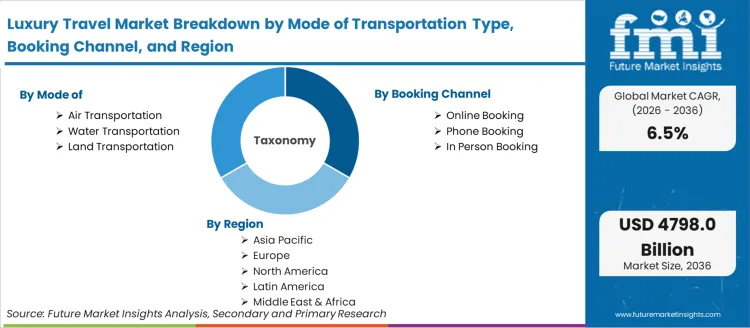
By Mode of Transportation Type:
- Air Transportation
- Water Transportation
- Land Transportation
By Booking Channel:
- Phone Booking
- Online Booking
- In Person Booking
By Tour Type:
- Independent Traveller
- Package Traveller
- Tour Group
By Consumer Orientation:
- Men
- Women
By Age Group:
- 15-25 Years
- 26-35 Years
- 36-45 Years
- 46-55 Years
- 56-65 Years
- 66-75 Years
- Above 75
By Region:
- North America
- Latin America
- Western Europe
- Eastern Europe
- South Asia and Pacific
- East Asia
- The Middle East and Africa
Bibliography
- 1. United Nations World Tourism Organization. (2024). UNWTO Tourism Barometer: Luxury and Premium Travel Assessment. UNWTO.
- 2. World Travel and Tourism Council. (2024). Economic Impact Report: Premium Travel Segment. WTTC.
- 3. International Air Transport Association. (2024). IATA Premium Traffic Statistics. IATA.
- 4. European Travel Commission. (2024). Trends and Prospects: Luxury Tourism in Europe. ETC.
- 5. Organisation for Economic Co-operation and Development. (2024). OECD Tourism Trends and Policies: High-Value Tourism Assessment. OECD.
- 6. Mastercard Economics Institute. (2024). Global Luxury Travel Spending Index. Mastercard.
This bibliography is provided for reader reference. The full FMI report contains the complete reference list with primary research documentation.
Frequently Asked Questions
How large is the demand for Luxury Travel in the global market in 2026?
Demand for luxury travel in the global market is estimated to be valued at USD 2556.00 billion in 2026.
What will be the market size of Luxury Travel by 2036?
Market size for luxury travel is projected to reach USD 4797.96 billion by 2036.
What is the expected demand growth for Luxury Travel between 2026 and 2036?
Demand for luxury travel is expected to grow at a CAGR of 6.50% between 2026 and 2036.
Which Mode of Transportation Type is poised to lead global sales by 2026?
Air Transportation accounts for 50.0% in 2026, reflecting established buyer preferences.
How is Online Booking driving Luxury Travel adoption?
Online Booking represents 46.3% of segment demand as end-use requirements favor this category.
What is driving demand in Australia?
Australia registers a 8.10% CAGR through 2036, propelled by domestic investment and rising consumption.
What does Luxury Travel Market definition mean in this report?
The luxury travel market encompasses premium travel experiences including first-class and business-class air transportation, five-star and ultra-luxury hotel accommodations, bespoke tour packages, private yacht and villa rentals, expedition cruises, and curated cultural and adventure itineraries targeting high-net-worth individuals and affluent leisure travelers seeking personalized, exclusive, and experiential travel.
How does FMI build and validate the Luxury Travel forecast?
Forecasting models apply a hybrid bottom-up methodology starting with verified transaction data, cross-validated against publicly reported statistics and company financial disclosures.
Preview the report firsthand - request a free sample
Get SampleGet the brochure for pricing and purchase details.
Get PDFTable of Content
- Executive Summary
- Global Market Outlook
- Demand-side Trends
- Supply-side Trends
- Technology Roadmap Analysis
- Analysis and Recommendations
- Market Overview
- Market Coverage / Taxonomy
- Market Definition / Scope / Limitations
- Research Methodology
- Chapter Orientation
- Analytical Lens and Working Hypotheses
- Market Structure, Signals, and Trend Drivers
- Benchmarking and Cross-market Comparability
- Market Sizing, Forecasting, and Opportunity Mapping
- Research Design and Evidence Framework
- Desk Research Programme (Secondary Evidence)
- Company Annual and Sustainability Reports
- Peer-reviewed Journals and Academic Literature
- Corporate Websites, Product Literature, and Technical Notes
- Earnings Decks and Investor Briefings
- Statutory Filings and Regulatory Disclosures
- Technical White Papers and Standards Notes
- Trade Journals, Industry Magazines, and Analyst Briefs
- Conference Proceedings, Webinars, and Seminar Materials
- Government Statistics Portals and Public Data Releases
- Press Releases and Reputable Media Coverage
- Specialist Newsletters and Curated Briefings
- Sector Databases and Reference Repositories
- FMI Internal Proprietary Databases and Historical Market Datasets
- Subscription Datasets and Paid Sources
- Social Channels, Communities, and Digital Listening Inputs
- Additional Desk Sources
- Expert Input and Fieldwork (Primary Evidence)
- Primary Modes
- Qualitative Interviews and Expert Elicitation
- Quantitative Surveys and Structured Data Capture
- Blended Approach
- Why Primary Evidence is Used
- Field Techniques
- Interviews
- Surveys
- Focus Groups
- Observational and In-context Research
- Social and Community Interactions
- Stakeholder Universe Engaged
- C-suite Leaders
- Board Members
- Presidents and Vice Presidents
- R&D and Innovation Heads
- Technical Specialists
- Domain Subject-matter Experts
- Scientists
- Physicians and Other Healthcare Professionals
- Governance, Ethics, and Data Stewardship
- Research Ethics
- Data Integrity and Handling
- Primary Modes
- Tooling, Models, and Reference Databases
- Desk Research Programme (Secondary Evidence)
- Data Engineering and Model Build
- Data Acquisition and Ingestion
- Cleaning, Normalisation, and Verification
- Synthesis, Triangulation, and Analysis
- Quality Assurance and Audit Trail
- Market Background
- Market Dynamics
- Drivers
- Restraints
- Opportunity
- Trends
- Scenario Forecast
- Demand in Optimistic Scenario
- Demand in Likely Scenario
- Demand in Conservative Scenario
- Opportunity Map Analysis
- Product Life Cycle Analysis
- Supply Chain Analysis
- Investment Feasibility Matrix
- Value Chain Analysis
- PESTLE and Porter’s Analysis
- Regulatory Landscape
- Regional Parent Market Outlook
- Production and Consumption Statistics
- Import and Export Statistics
- Market Dynamics
- Global Market Analysis 2021 to 2025 and Forecast, 2026 to 2036
- Historical Market Size Value (USD Million) Analysis, 2021 to 2025
- Current and Future Market Size Value (USD Million) Projections, 2026 to 2036
- Y-o-Y Growth Trend Analysis
- Absolute $ Opportunity Analysis
- Global Market Pricing Analysis 2021 to 2025 and Forecast 2026 to 2036
- Global Market Analysis 2021 to 2025 and Forecast 2026 to 2036, By Mode of Transportation Type
- Introduction / Key Findings
- Historical Market Size Value (USD Million) Analysis By Mode of Transportation Type , 2021 to 2025
- Current and Future Market Size Value (USD Million) Analysis and Forecast By Mode of Transportation Type , 2026 to 2036
- Air Transportation
- Water Transportation
- Land Transportation
- Air Transportation
- Y-o-Y Growth Trend Analysis By Mode of Transportation Type , 2021 to 2025
- Absolute $ Opportunity Analysis By Mode of Transportation Type , 2026 to 2036
- Global Market Analysis 2021 to 2025 and Forecast 2026 to 2036, By Booking Channel
- Introduction / Key Findings
- Historical Market Size Value (USD Million) Analysis By Booking Channel, 2021 to 2025
- Current and Future Market Size Value (USD Million) Analysis and Forecast By Booking Channel, 2026 to 2036
- Online Booking
- Phone Booking
- In Person Booking
- Online Booking
- Y-o-Y Growth Trend Analysis By Booking Channel, 2021 to 2025
- Absolute $ Opportunity Analysis By Booking Channel, 2026 to 2036
- Global Market Analysis 2021 to 2025 and Forecast 2026 to 2036, By Tour Type
- Introduction / Key Findings
- Historical Market Size Value (USD Million) Analysis By Tour Type, 2021 to 2025
- Current and Future Market Size Value (USD Million) Analysis and Forecast By Tour Type, 2026 to 2036
- Package Traveller
- Independent Traveller
- Tour Group
- Package Traveller
- Y-o-Y Growth Trend Analysis By Tour Type, 2021 to 2025
- Absolute $ Opportunity Analysis By Tour Type, 2026 to 2036
- Global Market Analysis 2021 to 2025 and Forecast 2026 to 2036, By Consumer Orientation
- Introduction / Key Findings
- Historical Market Size Value (USD Million) Analysis By Consumer Orientation, 2021 to 2025
- Current and Future Market Size Value (USD Million) Analysis and Forecast By Consumer Orientation, 2026 to 2036
- Men
- Women
- Men
- Y-o-Y Growth Trend Analysis By Consumer Orientation, 2021 to 2025
- Absolute $ Opportunity Analysis By Consumer Orientation, 2026 to 2036
- Global Market Analysis 2021 to 2025 and Forecast 2026 to 2036, By Age Group
- Introduction / Key Findings
- Historical Market Size Value (USD Million) Analysis By Age Group, 2021 to 2025
- Current and Future Market Size Value (USD Million) Analysis and Forecast By Age Group, 2026 to 2036
- 15-25 Years
- 26-35 Years
- 36-45 Years
- 46-55 Years
- 56-65 Years
- 66-75 Years
- Above 75
- 15-25 Years
- Y-o-Y Growth Trend Analysis By Age Group, 2021 to 2025
- Absolute $ Opportunity Analysis By Age Group, 2026 to 2036
- Global Market Analysis 2021 to 2025 and Forecast 2026 to 2036, By Region
- Introduction
- Historical Market Size Value (USD Million) Analysis By Region, 2021 to 2025
- Current Market Size Value (USD Million) Analysis and Forecast By Region, 2026 to 2036
- North America
- Latin America
- Western Europe
- Eastern Europe
- East Asia
- South Asia and Pacific
- Middle East & Africa
- Market Attractiveness Analysis By Region
- North America Market Analysis 2021 to 2025 and Forecast 2026 to 2036, By Country
- Historical Market Size Value (USD Million) Trend Analysis By Market Taxonomy, 2021 to 2025
- Market Size Value (USD Million) Forecast By Market Taxonomy, 2026 to 2036
- By Country
- USA
- Canada
- Mexico
- By Mode of Transportation Type
- By Booking Channel
- By Tour Type
- By Consumer Orientation
- By Age Group
- By Country
- Market Attractiveness Analysis
- By Country
- By Mode of Transportation Type
- By Booking Channel
- By Tour Type
- By Consumer Orientation
- By Age Group
- Key Takeaways
- Latin America Market Analysis 2021 to 2025 and Forecast 2026 to 2036, By Country
- Historical Market Size Value (USD Million) Trend Analysis By Market Taxonomy, 2021 to 2025
- Market Size Value (USD Million) Forecast By Market Taxonomy, 2026 to 2036
- By Country
- Brazil
- Chile
- Rest of Latin America
- By Mode of Transportation Type
- By Booking Channel
- By Tour Type
- By Consumer Orientation
- By Age Group
- By Country
- Market Attractiveness Analysis
- By Country
- By Mode of Transportation Type
- By Booking Channel
- By Tour Type
- By Consumer Orientation
- By Age Group
- Key Takeaways
- Western Europe Market Analysis 2021 to 2025 and Forecast 2026 to 2036, By Country
- Historical Market Size Value (USD Million) Trend Analysis By Market Taxonomy, 2021 to 2025
- Market Size Value (USD Million) Forecast By Market Taxonomy, 2026 to 2036
- By Country
- Germany
- UK
- Italy
- Spain
- France
- Nordic
- BENELUX
- Rest of Western Europe
- By Mode of Transportation Type
- By Booking Channel
- By Tour Type
- By Consumer Orientation
- By Age Group
- By Country
- Market Attractiveness Analysis
- By Country
- By Mode of Transportation Type
- By Booking Channel
- By Tour Type
- By Consumer Orientation
- By Age Group
- Key Takeaways
- Eastern Europe Market Analysis 2021 to 2025 and Forecast 2026 to 2036, By Country
- Historical Market Size Value (USD Million) Trend Analysis By Market Taxonomy, 2021 to 2025
- Market Size Value (USD Million) Forecast By Market Taxonomy, 2026 to 2036
- By Country
- Russia
- Poland
- Hungary
- Balkan & Baltic
- Rest of Eastern Europe
- By Mode of Transportation Type
- By Booking Channel
- By Tour Type
- By Consumer Orientation
- By Age Group
- By Country
- Market Attractiveness Analysis
- By Country
- By Mode of Transportation Type
- By Booking Channel
- By Tour Type
- By Consumer Orientation
- By Age Group
- Key Takeaways
- East Asia Market Analysis 2021 to 2025 and Forecast 2026 to 2036, By Country
- Historical Market Size Value (USD Million) Trend Analysis By Market Taxonomy, 2021 to 2025
- Market Size Value (USD Million) Forecast By Market Taxonomy, 2026 to 2036
- By Country
- China
- Japan
- South Korea
- By Mode of Transportation Type
- By Booking Channel
- By Tour Type
- By Consumer Orientation
- By Age Group
- By Country
- Market Attractiveness Analysis
- By Country
- By Mode of Transportation Type
- By Booking Channel
- By Tour Type
- By Consumer Orientation
- By Age Group
- Key Takeaways
- South Asia and Pacific Market Analysis 2021 to 2025 and Forecast 2026 to 2036, By Country
- Historical Market Size Value (USD Million) Trend Analysis By Market Taxonomy, 2021 to 2025
- Market Size Value (USD Million) Forecast By Market Taxonomy, 2026 to 2036
- By Country
- India
- ASEAN
- Australia & New Zealand
- Rest of South Asia and Pacific
- By Mode of Transportation Type
- By Booking Channel
- By Tour Type
- By Consumer Orientation
- By Age Group
- By Country
- Market Attractiveness Analysis
- By Country
- By Mode of Transportation Type
- By Booking Channel
- By Tour Type
- By Consumer Orientation
- By Age Group
- Key Takeaways
- Middle East & Africa Market Analysis 2021 to 2025 and Forecast 2026 to 2036, By Country
- Historical Market Size Value (USD Million) Trend Analysis By Market Taxonomy, 2021 to 2025
- Market Size Value (USD Million) Forecast By Market Taxonomy, 2026 to 2036
- By Country
- Kingdom of Saudi Arabia
- Other GCC Countries
- Turkiye
- South Africa
- Other African Union
- Rest of Middle East & Africa
- By Mode of Transportation Type
- By Booking Channel
- By Tour Type
- By Consumer Orientation
- By Age Group
- By Country
- Market Attractiveness Analysis
- By Country
- By Mode of Transportation Type
- By Booking Channel
- By Tour Type
- By Consumer Orientation
- By Age Group
- Key Takeaways
- Key Countries Market Analysis
- USA
- Pricing Analysis
- Market Share Analysis, 2025
- By Mode of Transportation Type
- By Booking Channel
- By Tour Type
- By Consumer Orientation
- By Age Group
- Canada
- Pricing Analysis
- Market Share Analysis, 2025
- By Mode of Transportation Type
- By Booking Channel
- By Tour Type
- By Consumer Orientation
- By Age Group
- Mexico
- Pricing Analysis
- Market Share Analysis, 2025
- By Mode of Transportation Type
- By Booking Channel
- By Tour Type
- By Consumer Orientation
- By Age Group
- Brazil
- Pricing Analysis
- Market Share Analysis, 2025
- By Mode of Transportation Type
- By Booking Channel
- By Tour Type
- By Consumer Orientation
- By Age Group
- Chile
- Pricing Analysis
- Market Share Analysis, 2025
- By Mode of Transportation Type
- By Booking Channel
- By Tour Type
- By Consumer Orientation
- By Age Group
- Germany
- Pricing Analysis
- Market Share Analysis, 2025
- By Mode of Transportation Type
- By Booking Channel
- By Tour Type
- By Consumer Orientation
- By Age Group
- UK
- Pricing Analysis
- Market Share Analysis, 2025
- By Mode of Transportation Type
- By Booking Channel
- By Tour Type
- By Consumer Orientation
- By Age Group
- Italy
- Pricing Analysis
- Market Share Analysis, 2025
- By Mode of Transportation Type
- By Booking Channel
- By Tour Type
- By Consumer Orientation
- By Age Group
- Spain
- Pricing Analysis
- Market Share Analysis, 2025
- By Mode of Transportation Type
- By Booking Channel
- By Tour Type
- By Consumer Orientation
- By Age Group
- France
- Pricing Analysis
- Market Share Analysis, 2025
- By Mode of Transportation Type
- By Booking Channel
- By Tour Type
- By Consumer Orientation
- By Age Group
- India
- Pricing Analysis
- Market Share Analysis, 2025
- By Mode of Transportation Type
- By Booking Channel
- By Tour Type
- By Consumer Orientation
- By Age Group
- ASEAN
- Pricing Analysis
- Market Share Analysis, 2025
- By Mode of Transportation Type
- By Booking Channel
- By Tour Type
- By Consumer Orientation
- By Age Group
- Australia & New Zealand
- Pricing Analysis
- Market Share Analysis, 2025
- By Mode of Transportation Type
- By Booking Channel
- By Tour Type
- By Consumer Orientation
- By Age Group
- China
- Pricing Analysis
- Market Share Analysis, 2025
- By Mode of Transportation Type
- By Booking Channel
- By Tour Type
- By Consumer Orientation
- By Age Group
- Japan
- Pricing Analysis
- Market Share Analysis, 2025
- By Mode of Transportation Type
- By Booking Channel
- By Tour Type
- By Consumer Orientation
- By Age Group
- South Korea
- Pricing Analysis
- Market Share Analysis, 2025
- By Mode of Transportation Type
- By Booking Channel
- By Tour Type
- By Consumer Orientation
- By Age Group
- Russia
- Pricing Analysis
- Market Share Analysis, 2025
- By Mode of Transportation Type
- By Booking Channel
- By Tour Type
- By Consumer Orientation
- By Age Group
- Poland
- Pricing Analysis
- Market Share Analysis, 2025
- By Mode of Transportation Type
- By Booking Channel
- By Tour Type
- By Consumer Orientation
- By Age Group
- Hungary
- Pricing Analysis
- Market Share Analysis, 2025
- By Mode of Transportation Type
- By Booking Channel
- By Tour Type
- By Consumer Orientation
- By Age Group
- Kingdom of Saudi Arabia
- Pricing Analysis
- Market Share Analysis, 2025
- By Mode of Transportation Type
- By Booking Channel
- By Tour Type
- By Consumer Orientation
- By Age Group
- Turkiye
- Pricing Analysis
- Market Share Analysis, 2025
- By Mode of Transportation Type
- By Booking Channel
- By Tour Type
- By Consumer Orientation
- By Age Group
- South Africa
- Pricing Analysis
- Market Share Analysis, 2025
- By Mode of Transportation Type
- By Booking Channel
- By Tour Type
- By Consumer Orientation
- By Age Group
- USA
- Market Structure Analysis
- Competition Dashboard
- Competition Benchmarking
- Market Share Analysis of Top Players
- By Regional
- By Mode of Transportation Type
- By Booking Channel
- By Tour Type
- By Consumer Orientation
- By Age Group
- Competition Analysis
- Competition Deep Dive
- TUI Elite
- Overview
- Product Portfolio
- Profitability by Market Segments (Product/Age /Sales Channel/Region)
- Sales Footprint
- Strategy Overview
- Marketing Strategy
- Product Strategy
- Channel Strategy
- TCS World Travel
- Abercrombie & Kent USA
- Micato Safaris
- Butterfield & Robinson Inc.
- Scott Dunn Ltd.
- Cox & Kings Ltd.
- Exodus Travels
- Lindblad Expeditions
- TUI Elite
- Competition Deep Dive
- Assumptions & Acronyms Used


